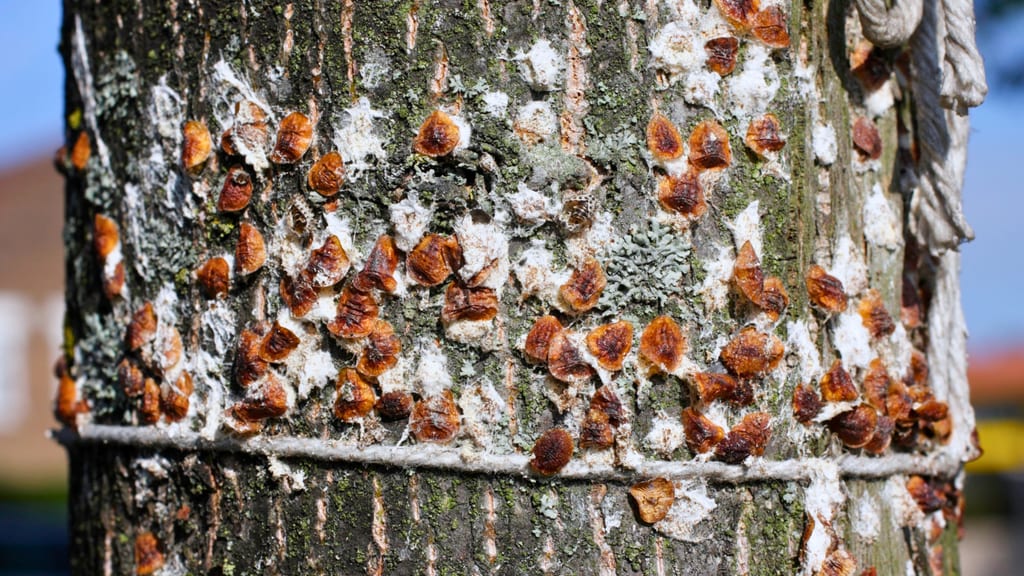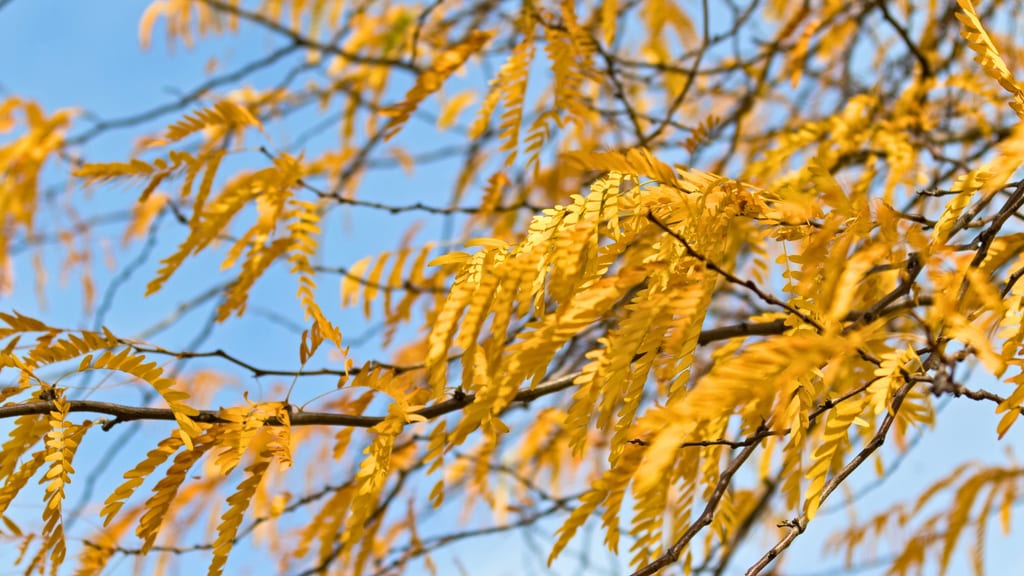
If your car or deck keeps turning sticky under an oak, maple, or honeylocust, lecanium scale is a likely cause. Look closely and you may even spot the insects, which look like small, rounded brown bumps on the twigs.
Most infestations are only a nuisance, even during Michigan's periodic outbreaks, though heavy infestations repeated over several years can thin a tree's canopy and kill small branches.
Below, we’ll explain how to identify lecanium scale, which trees it targets, the signs of an infestation, its Michigan life cycle, and your treatment options.
Common Misconception: “My Tree Is Dripping Sap”
The sticky drip under an infested oak or maple is usually honeydew, the sugary waste scale insects excrete as they feed. Honeydew is easy to mistake for sap as it coats cars, decks, and siding beneath the tree, and it feeds the black sooty mold that follows.
Lecanium Scale Biology
Lecanium scales are soft scale insects (genus Parthenolecanium) that suck sap from shade trees and other woody plants.
Males of most species are rare, and some have never been observed, so nearly every scale you'll see is a female. Mature females are rounded to hemispherical, reddish to dark brown, and up to 1/4 inch across. As a female lecanium scale matures, her body hardens into a helmet-like shell that shelters 1,000 to 5,000 eggs.
Lecanium Scale Host Trees
Lecanium scale feeds on many hardwoods, but a handful of trees carry most Michigan infestations, including the following.
- Oaks (Quercus spp.)
- Maples (Acer spp.), especially silver maple (A. saccharinum)
- Honeylocust (Gleditsia triacanthos)
- Hickories (Carya spp.)
- Birches (Betula spp.)
- Fruit trees and woody shrubs
Street and yard trees hemmed in by pavement tend to carry the heaviest infestations, since heat and drought stress favor lecanium scale. The honeylocusts and silver maples lining Southeast Michigan streets are frequent targets.
Signs of a Lecanium Scale Infestation
Lecanium scale infestations often go unnoticed until the tree shows symptoms or the drip becomes a problem below it. Watch for the following signs, both on the tree and beneath it.
- Brown Bumps on Twigs: Small, rounded scales crowd twigs and small branches, where they can pass for part of the bark.
- Sticky Droplets: Honeydew spots cars, decks, and patio furniture, then hardens and becomes difficult to remove once dry.
- Black Sooty Mold: A dark, sooty coating spreads over leaves, branches, trunks, and objects below.
- Insect Traffic: Ants, bees, wasps, and flies gather to feed on the honeydew.
- Yellowing Leaves: In heavy infestations, leaves curl, turn yellow, and drop early.
- Scales on Leaf Undersides: In summer, young scales cluster along the undersides of leaves.
- Thinning Canopy: After several heavy years, the crown thins and small branches die back.
Young trees are more vulnerable to heavy infestations than established ones. Brown bumps can also belong to other scale insects, so have an arborist confirm what’s on your tree before planning treatment.
Brown Bumps and Sticky Drips Under Your Tree?
Lecanium scale treatment works only at certain points in the insect’s life cycle. If the drip keeps coming back or the canopy is thinning, schedule an arborist consultation. Longtree Tree Service is led by an ISA Certified Arborist who can confirm the pest and plan treatment for your tree.

The Lecanium Scale Life Cycle in Michigan
Lecanium scale has one generation per year, and each stage affects what you’ll see on the tree and whether treatment will work.
From late spring until hatch, the eggs sit under the female’s shell, out of reach of any spray. The crawlers that hatch in early summer settle on the leaves, where sprays can reach them.
Michigan’s seasonal timing typically runs as follows, though it shifts somewhat from year to year.
| Season | Stage | What You’ll Notice |
|---|---|---|
| Winter | Second-stage nymphs overwinter on twigs under a thin, waxy shield | Little activity; flat, brown nymphs on twigs |
| Early spring | Nymphs resume feeding; females swell | Brown bumps grow on twigs; honeydew starts |
| Late May–early June | Females lay eggs beneath their shells, then stop feeding | Peak honeydew drip and sooty mold |
| Mid-June–early July | Crawlers hatch and settle on leaf undersides | Honeydew eases; best window for crawler treatment |
| Late summer–fall | Nymphs feed on leaves, molt, and move back to twigs | Honeydew can return as the young scales grow |
Lecanium Scale Treatment Options
The right lecanium scale treatment depends on the tree’s size, how heavy the infestation is, and where the scale is in its life cycle.
A few scales on a healthy tree with no honeydew problem usually don’t need treatment at all. Lecanium scale populations rise and fall on a five- to 10-year cycle as predators and parasites respond to higher scale numbers, so light infestations often decline on their own.
Once young scales return to the twigs and harden, they’re difficult to control. Heavy infestations may also take repeated treatments over a couple of growing seasons.
Systemic Insecticide Treatments
For large trees, a licensed pesticide applicator may apply a systemic insecticide to the soil or inject it into the trunk. The tree absorbs the insecticide, allowing feeding scales to take it in.
Spring trunk injections of imidacloprid don’t control large females well during May and early June, but they do provide good control of the next generation as it settles on the leaves in July and August.
Crawler-Stage Sprays
Sprays work only after crawlers leave the shelter of the dead females and settle on the leaves, typically mid-June to early July in Michigan. Horticultural oils control crawlers while sparing many of the natural enemies that feed on scale.
Broad-spectrum contact sprays such as pyrethroids kill those natural enemies, which can make the scale problem worse.
Pruning Infested Branches
Pruning out heavily infested branches helps when only a few are affected. On larger infestations, removing the worst sections can make other treatments more practical. Avoid removing so much that the pruning itself stresses the tree.
Watering & General Tree Care
Vigorous trees tolerate lecanium scale far better than stressed ones. Water infested trees during drought, and hold off on extra fertilizer, since over-fertilizing favors scale buildup. When planting near a driveway or street, give the new tree as much open soil and water as you can.
Protecting Natural Enemies
Lady beetles and tiny parasitic wasps normally keep lecanium scale below damaging numbers. But when these natural enemies are suppressed, heavy scale populations can persist for years.
If scale keeps coming back, ask your arborist to review any routine spraying on the property, since broad-spectrum sprays can wipe out the natural enemies that keep scale in check. When the scale itself needs treatment, the crawler-stage approach above is the one that spares them.
When to Call an Arborist
An arborist visit makes sense in any of the following situations:
- Honeydew returns year after year
- Branches are dying back or the canopy is thinning
- A young tree carries heavy scale
- A large or high-value tree may need a systemic treatment
- You’re not sure whether the bumps are lecanium or another scale

Lecanium Scale FAQs
Lecanium scale raises a number of common questions among Michigan homeowners. Below, we answer the ones we hear most often from our clients.
Why is my tree dripping sticky sap?
When a tree seems to be dripping sticky sap, the drip is usually honeydew, the sugary waste of scale insects such as lecanium scale. Small, rounded brown bumps on the twigs above the drip are another clue, although other scale insects can look similar.
Will lecanium scale kill my tree?
Lecanium scale rarely kills a mature tree. Heavy infestations repeated over several years can kill small branches and thin the canopy, and young trees are more at risk.
When should lecanium scale be treated?
Lecanium scale sprays work best when crawlers are on the leaves, typically mid-June to early July in Michigan. Systemic treatments follow a different schedule, which your arborist can plan around your tree.
How do I remove honeydew from my car?
To remove honeydew from your car, wash it off promptly, before the droplets dry and harden. Controlling the scale in the tree overhead keeps the honeydew from coming back.
Is sooty mold harmful to my tree?
Sooty mold generally does little direct harm to your tree because it grows on the honeydew coating rather than feeding on the tree itself. The black film can darken leaves and objects below. Controlling the scale removes the honeydew that supports the mold.
Is lecanium scale the same as cottony maple scale?
Lecanium scale and cottony maple scale are different insects, though both are soft scales on Michigan hardwoods. One clear difference is the white, cottony egg sacs that cottony maple scale produces by mid-June.
Can I spray my own tree for lecanium scale?
Spraying your own tree for lecanium scale is rarely practical once the tree is large. Crawler sprays work only in a short window and must reach the leaves, and heavy infestations on large trees are better handled with a systemic treatment from a licensed pesticide applicator. Pyrethroids are best avoided, since they kill the natural enemies that keep scale in check.
Have Your Trees Checked by an ISA Certified Arborist in Southfield
Longtree Tree Service has served Southeast Michigan since 2019 and is led by founder and owner Kyle Phillips, an ISA Certified Arborist.
If you’ve noticed sticky drips or brown bumps on your trees, our team can inspect the tree, identify the source of the problem, and recommend appropriate next steps, which may include pruning heavily infested branches.
Schedule a consultation for your trees in Southfield, Lathrup Village, Oak Park, or Beverly Hills today.

Sources & References
- Michigan State University Extension – “Lecanium scale and other soft scale insects”
Michigan host trees, the five- to 10-year outbreak cycle, and long-term thinning where natural enemies are suppressed.
https://www.canr.msu.edu/news/lecanium_scale_and_other_soft_scale_insects - Michigan State University Extension – “Lecanium scale and cottony maple scale on honeylocust, silver maple and other street trees”
Localized outbreaks in Southeast Michigan and seasonal honeydew peaks.
https://www.canr.msu.edu/news/lecanium_scale_and_cottony_maple_scale_on_honeylocust_silver_maple_and_othe - Michigan State University Extension – “A big year for outbreaks of soft scales in Michigan”
Detroit-area egg timing, mid-June to early July crawler emergence, and spring imidacloprid trunk injection results for soft scales.
https://www.canr.msu.edu/news/a_big_year_for_outbreaks_of_soft_scales_in_michigan - Michigan Department of Natural Resources – “Lecanium scales thick on trees in Crawford, Otsego, Roscommon counties”
Signs, risk to young trees, natural enemies, and treating at the crawler stage.
https://content.govdelivery.com/accounts/MIDNR/bulletins/14f4250 - NC State Extension – “Lecanium Scale Insects”
Taxonomy and identification, size, egg counts, life cycle, honeydew and sooty mold, outbreak causes, and insecticide timing.
https://content.ces.ncsu.edu/oak-lecanium-scale - University of Kentucky Entomology – “Lecanium Scales”
Watering, fertilizing, and pruning guidance, plus systemic versus crawler treatments.
https://entomology.mgcafe.uky.edu/ef430 - UC Statewide IPM Program – “Lecanium Scales”
One-generation life cycle, pruning limits, and conserving natural enemies.
https://ipm.ucanr.edu/PMG/GARDEN/PLANTS/INVERT/lecaniumscale.html