A SHORT DRIVE EAST ON I-696
From our office at 23800 Eight Mile W in Southfield, downtown Royal Oak is about 8 to 9 miles away, usually 15 to 20 minutes by I-696 or 11 Mile. Neighborhoods on the city’s west side along Woodward are even closer.
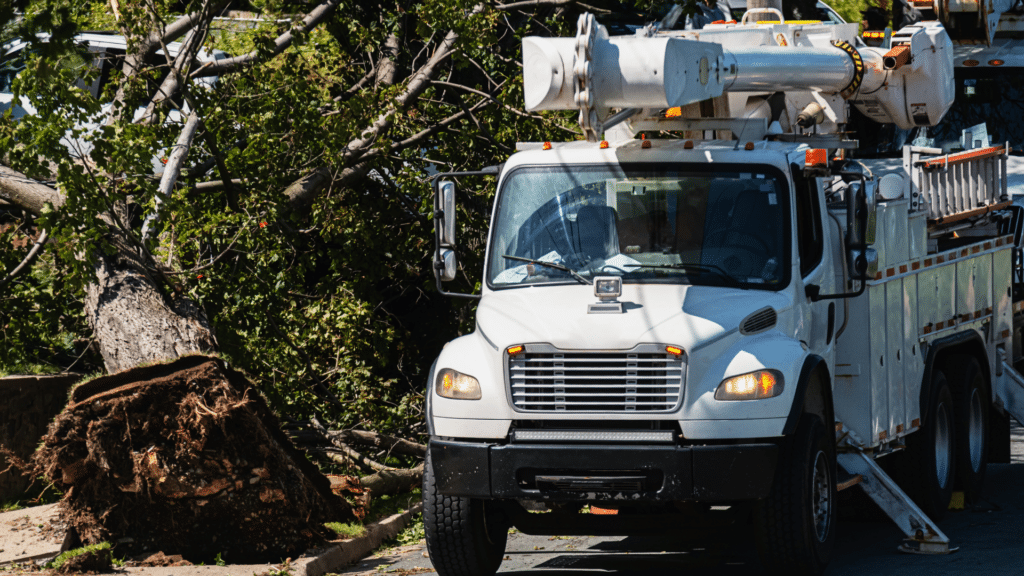
Being that close means estimates happen quickly and crews keep their appointments. If a storm splits a tree over your garage, you’re calling a company that’s minutes away, not an hour out.
We also know how parking and access work on Royal Oak’s tighter streets, so we plan truck placement and equipment before the crew arrives.
THE CITY NAMED AFTER A TREE
Royal Oak takes its name from a tree. In 1819, Territorial Governor Lewis Cass led a survey through the area, and a large oak reminded him of the Royal Oak where King Charles II hid after the Battle of Worcester. The village incorporated in 1891 and became a city in 1921.
Then came the boom. The population jumped from 6,007 in 1920 to 22,904 in 1930 as Royal Oak filled in as a Detroit suburb along Woodward. That decade built much of the city’s older housing on tight, tree-lined street grids. The 2020 census counted 58,211 people on just 11.8 square miles, so houses, garages, fences and power lines sit close together.
The trees that went in with those homes have aged right alongside them. Many are now as old as the houses, and the city itself manages the street trees in the lawn strip between the sidewalk and the curb.
Water shaped the city, too. Royal Oak grew up around the Red Run, whose branch beneath Vinsetta Boulevard was filled in during the 1930s as a WPA project. The rest of the river in Oakland County was buried in a drain pipe in 1967 and 1968.
WHY ROYAL OAK TREES TAKE CAREFUL WORK
Narrow lots leave no room to drop a tree. Most backyard removals here are done in pieces, with each section lowered by rope over garages, fences and the neighbor’s yard. That takes trained climbers and rigging, not just a saw.
Big trees next to homes approaching 100 years old bring specific problems: roots finding their way into older sewer lines, limbs over roofs and service wires, and decay in trunks that were topped or badly pruned decades ago. A good inspection tells you what can be corrected and what can’t.
The city’s rules matter, too. All work on public trees must be done or approved by the city, pruning one requires a right-of-way permit from the Engineering Department, and only an insured tree company can do the work. Trees on your own lot are yours to manage. We’ll sort out which is which before anything gets cut.
If a city tree in front of your house looks dangerous, you can request an inspection, and an ISA Certified Arborist rates the risk as low, moderate or high. For the trees on your side of the sidewalk, we do the same kind of risk assessment and walk you through the options.
WE WORK ON YOUR BLOCK, NOT JUST IN YOUR AREA
On streets this close together, your neighbors watch every job from their porch. That’s fine with us. Clean cuts, careful rigging and a yard left cleaner than we found it are what keep Royal Oak homeowners calling us back.
When the job is done, every branch and log leaves with us, so the street looks like nothing happened.
 Skip to content