Skip to content
Trees are certainly incredibly resilient organisms. From extreme weather and deadly diseases to voracious predators and wood-decaying fungi, they survive despite being under constant assault. Many take these stresses in stride and live for decades or even centuries.
Nevertheless, some trees can begin to decline or exhibit structural hazards when faced with these threats. When these situations arise, it’s important for homeowners and property managers to know where to turn.
The Longtree Tree Service team has been supporting Michiganders in exactly these kinds of scenarios and providing Plant Health Care Services (PHC) since 2019. We’ll outline some of the services we provide below and answer a few of the most common questions our clients have about them.

Tree Insects & Other Pests: Services Available
There are a number of insects and invertebrates that attack trees in Southeast Michigan, but the following are some of the ones that prompt homeowners and property managers to reach out to our team for help.
| Pest | Description | Common Treatment |
|---|---|---|
| Emerald Ash Borer (Agrilus planipennis) | An invasive beetle that kills ash trees by disrupting water and nutrient transport beneath the tree’s bark. | Preventive trunk injections with emamectin benzoate are the standard treatment for high-value ash trees. |
| Spongy Moth (Lymantria dispar) | A moth whose caterpillar can heavily defoliate oaks and many other hardwood trees during outbreaks. | Biological insecticides such as Bt (Bacillus thuringiensis) or targeted insecticide applications are used. |
| Spotted Lanternfly (Lycorma delicatula) | An invasive sap-feeding insect that threatens many landscape trees and agricultural crops. | Systemic insecticide treatments and removal of preferred host plants are common management strategies. |
| Bronze Birch Borer (Agrilus anxius) | A native beetle that often attacks stressed or drought-affected birch trees. | Improving tree vigor and applying systemic insecticides can help protect valuable trees. |
| Two-Lined Chestnut Borer (Agrilus bilineatus) | A wood-boring beetle that attacks stressed oak trees, particularly following drought or stress. | Improving tree health and applying preventive systemic insecticides are the most common treatments. |
| Japanese Beetle (Popillia japonica) | Adult beetles feed on the foliage of hundreds of plant species, often skeletonizing leaves. | Foliar insecticide treatments are commonly used when damage becomes severe. |
| Scale Insects (various species) | These sap-feeding insects attach themselves to twigs, branches, or leaves and weaken trees over time. | Dormant oil, horticultural oil, or systemic insecticide treatments are commonly recommended. |
| Lecanium Scale (Parthenolecanium corni) | A soft scale insect that feeds on many hardwood trees and often produces sticky honeydew. | Systemic insecticides or treatments targeting crawler-stage insects are typically most effective. |
| Eastern Tent Caterpillar (Malacosoma americanum) | These caterpillars build conspicuous silk tents in branch crotches and feed on tree foliage in spring. | Pruning out tents and targeted insecticide treatments are the most common controls. |
| Fall Webworm (Hyphantria cunea) | This caterpillar creates large, webbed nests at branch ends during late summer and fall. | Pruning affected branches or applying insecticides when infestations are severe is usually sufficient. |
| Forest Tent Caterpillar (Malacosoma disstria) | Despite its name, this caterpillar does not build tents but can cause widespread defoliation of hardwoods. | Biological insecticides such as Bt are commonly used during significant outbreaks. |
| Aphids (various species) | Aphids feed on plant sap and often produce sticky honeydew that attracts ants and sooty mold. | Horticultural oils, insecticidal soaps, or systemic insecticides are commonly used when populations become problematic. |
| Spruce Gall Adelgid(Adelges abietis) | These tiny insects cause distinctive cone-like galls on spruce shoots and can affect tree appearance and vigor. | Dormant oil applications and properly timed insecticide treatments are the standard approach. |
| Pine Needle Scale (Chionaspis pinifoliae) | A common scale insect that feeds on pine needles and can cause needle yellowing and branch decline. | Horticultural oils or insecticides targeting the crawler stage are typically recommended. |
| Spider Mites(various species) | These tiny arachnids feed on plant tissues and often cause stippling, bronzing, and needle loss. | Horticultural oils, miticides, and improved plant health are the most common treatments. |
| White Pine Weevil (Pissodes strobi) | This insect attacks terminal leaders of spruce and pine, causing crooked growth and loss of form. | Pruning out damaged leaders and preventive insecticide treatments are common management strategies. |
Tree Pathogens & Diseases: Services Available
In some cases, homeowners and property managers notice that their trees are exhibiting signs of disease, rather than an insect attack. Some of the most common tree diseases that cause problems in Michigan include the following.
| Disease | Description | Common Treatment |
|---|---|---|
| Oak Wilt (Bretziella fagacearum) | A serious fungal disease that can rapidly kill red oaks and spread between nearby trees through root grafts. | Root-graft disruption and preventive fungicide injections are the most common management tools. |
| Dutch Elm Disease (Ophiostoma ulmi / O. novo-ulmi) | A vascular disease spread primarily by bark beetles that has killed millions of elm trees across North America. | Fungicide injections may help valuable trees, but removal is often necessary once infection is advanced. |
| Beech Bark Disease | A disease complex involving beech scale insects and fungal pathogens that causes bark damage and eventual death. | Management typically focuses on monitoring, preserving healthy trees, and removing severely affected specimens. |
| Beech Leaf Disease | An emerging disease associated with foliar nematodes that causes leaf banding, canopy thinning, and eventual decline. | Trunk-injected or soil-applied treatments are sometimes used, but management options are still evolving. |
| Anthracnose | A group of fungal diseases that cause leaf spots, blotches, and premature leaf drop on many shade trees. | Sanitation and, when warranted, preventive fungicide applications are the most common treatments. |
| Tar Spot (Rhytisma spp.) | A fungal disease that produces distinctive black spots on maple leaves and is primarily a cosmetic concern. | Raking and removing the infected leaves is typically the most effective management strategy. |
| Black Knot (Apiosporina morbosa) | A fungal disease that causes black, swollen galls on plums, native and exotic cherries, and related trees. | Pruning out infected branches several inches below the visible knots is the primary treatment. |
| Apple Scab (Venturia inaequalis) | A common fungal disease that causes leaf spotting, premature defoliation, and blemished fruit on apples and crabapples. | Sanitation and fungicide applications are the most common controls, along with planting resistant cultivars. |
| Fire Blight (Erwinia amylovora) | A bacterial disease that causes shoots and branches to appear scorched and die back rapidly. | Pruning infected branches and reducing conditions that favor infection are the primary management strategies. |
| Verticillium Wilt (Verticillium dahliae) | A soil-borne fungal disease that blocks water movement and causes branch dieback in many hardwood species. | There is no cure; management focuses on improving tree vigor and removing severely affected branches. |
| Rhizosphaera Needle Cast (Rhizosphaera kalkhoffii) | A common fungal disease of spruce that causes needle discoloration, loss, and canopy thinning. | Fungicide treatments combined with cultural improvements are the most common management approach. |
| Cytospora Canker | A fungal disease that commonly affects stressed spruce trees, causing branch dieback and resin-covered cankers. | Pruning affected branches and improving tree health through cultural methods are the primary treatments. |
| Diplodia Tip Blight (Diplodia sapinea) | A fungal disease of pine that kills new shoots and can cause significant canopy thinning. | Sanitation, stress reduction, and preventive fungicide applications are commonly recommended. |
| Dothistroma Needle Blight (Dothistroma septosporum) | A fungal disease that causes browning and premature loss of pine needles on even healthy, vigorous trees. | Fungicide applications and improving growing conditions are the most common treatments. |
| Canker Diseases (various species) | Various fungal pathogens can cause localized bark death, branch dieback, and structural weakness in trees. | Pruning affected branches and reducing tree stress are the most common management strategies. |
Other Tree Problems: Services Available
Not all tree-health problems are caused by pests or pathogens; some are caused by poor tree structure or abiotic (non-living) factors, such as temperature extremes, poor soil chemistry, or construction damage. Fortunately, there are a number of treatments we can use to help care for these trees, too.
| Condition | Context | Common Treatment |
|---|---|---|
| Codominant Stems & Included Bark | Multiple stems of similar size can develop weak attachments that increase the risk of splitting and failure. | Structural pruning and, in some cases, cabling are the most common corrective measures. |
| Crown Imbalance & Overextended Limbs | Uneven canopy growth or excessively long branches can increase mechanical stress and failure potential. | Selective pruning is typically used to improve the tree’s balance and reduce excessive loads. |
| Root Defects | Circling, girdling, damaged, or decayed roots can compromise tree stability and health. | Treatment depends on the defect but may include root collar excavation, pruning, or monitoring. |
| Stem Decay & Cavities | Internal decay can reduce structural strength even when the tree appears healthy from the outside. | Management typically involves inspection, risk assessment, pruning, support systems, or removal when necessary. |
| Soil Compaction | Compacted soil around a tree restricts root growth, water infiltration, and oxygen availability. | Mulching, soil improvement, and reducing traffic over root zones are common solutions. |
| Improper Planting Depth | Trees planted too deeply often develop root and trunk problems that shorten their lifespan. | Root collar excavation and correcting planting depth are the primary treatments. |
| Mulch Volcanoes | Excessive mulch piled against the trunk can encourage decay, girdling roots, and pest problems. | Mulch should be pulled away from the trunk and spread in a thin, wide layer, approximately 2 to 4 inches thick. |
| Grade Changes | Adding or removing soil around established trees can damage roots and disrupt normal growth. | Mitigation measures vary but often focus on protecting roots and improving site conditions. |
| Drought Stress | Extended periods of insufficient soil moisture can lead to canopy thinning, dieback, and decline. | Deep watering, irrigation system installation, and mulching are the most common management practices. |
| Winter Injury & Frost Cracks | Rapid temperature fluctuations can damage bark and living tissues, particularly on younger trees. | Most cases are managed through proper tree care and monitoring for secondary problems. |
| Salt Damage | De-icing salts can injure roots and foliage, causing browning, dieback, and reduced vigor. | Reducing salt exposure and improving soil conditions are the primary management strategies. |
| Nutrient Deficiency | Deficiencies can cause discoloration, poor growth, and reduced vigor, though symptoms often resemble other issues. | Soil testing followed by targeted fertilization is the preferred approach for addressing deficiencies. |
| Lightning Strike Damage | Lightning can cause bark loss, internal damage, root injury, and structural instability. | A professional assessment will need to determine whether pruning, monitoring, or removal is appropriate. |
| Construction Damage to Root Zones | Excavation, trenching, grading, and equipment traffic can severely injure tree roots. | Root-zone protection and mitigation measures are most effective when implemented early. |
Tree Pests & Disease: FAQ
Tree health issues can be difficult for homeowners and property managers to diagnose because many pests, diseases, environmental stresses, and structural defects produce similar symptoms. Below are some of the most common questions we hear about declining trees, insect infestations, and disease outbreaks.
How can I tell if my tree is sick or dying?
Look for warning signs such as dead branches, thinning leaves, premature leaf drop, discolored foliage, trunk damage, fungal growth, or significant dieback in the canopy.
When should I call an arborist about a tree problem?
You should contact an arborist if you notice a sudden decline, extensive dead branches, structural defects, signs of pests or disease, or any condition that may create a safety risk.
Can insects kill a healthy tree?
Some invasive pests, such as the emerald ash borer, can kill otherwise healthy trees. However, many insects primarily attack trees that are already stressed or weakened.
Are fungicides always necessary to treat tree diseases?
No. Many diseases are managed through pruning, sanitation, improving tree health, and reducing stress. Fungicides are typically most effective when used preventively and for specific diseases.
Why is only one tree in a row declining?
Differences in soil conditions, root damage, drainage, disease, construction impacts, and species susceptibility can cause one tree to decline while nearby trees remain healthy.
Can construction damage kill a tree years later?
Absolutely. Root damage from excavation, grading, trenching, or soil compaction may not produce visible symptoms for several years before decline becomes apparent.
What should I do if my tree was struck by lightning?
Have the tree inspected as soon as possible. Lightning can cause hidden structural and vascular damage that may not be immediately visible.
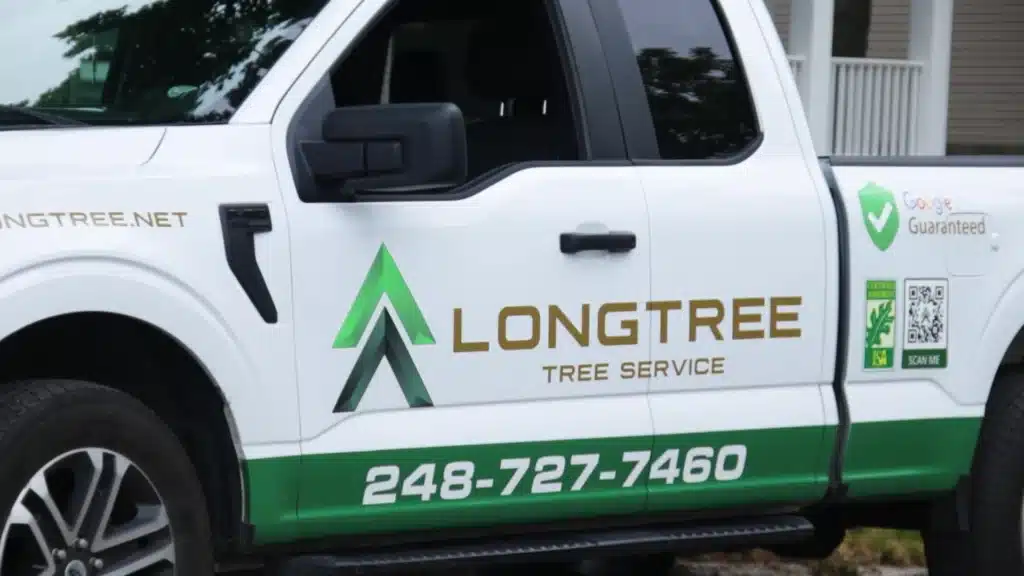
Longtree Tree Service: Your Source for Science-Based Tree Care
Whether you’re watching a tree lose foliage to anthracnose, you’re worried about a dead branch in the canopy, or you want to protect your trees from emerald ash borer, it’s important to get expert help. That’s the only way to be sure your trees will get the kind of support they need to thrive.
Since 2019, we’ve been providing tree care services across Southeast Michigan, from Franklin to Bloomfield Hills to Royal Oak and everywhere in between. With more than 70 years of combined experience and an ISA-certified arborist at the helm, Longtree Tree Service is the arboricultural team Michiganders can count on.
Contact us today to schedule your free consultation!