Skip to content
Known for their vibrant fall color, adaptable nature, and broad canopy shade, maple trees (Acer spp.) are a defining feature of many residential neighborhoods and landscapes throughout the Great Lakes State.
Many maples are fast-growing and tolerant of urban conditions, which has made them a go-to choice for homeowners, developers, and municipalities alike. But not all maples develop the same way. Some are well-suited to tight suburban lots, while others can outgrow their space or develop structural issues over time.
We’ll walk through the key types of maple trees you’re likely to encounter in Michigan and provide some practical advice that should help you care for your trees below.
Common Maple Trees in Michigan
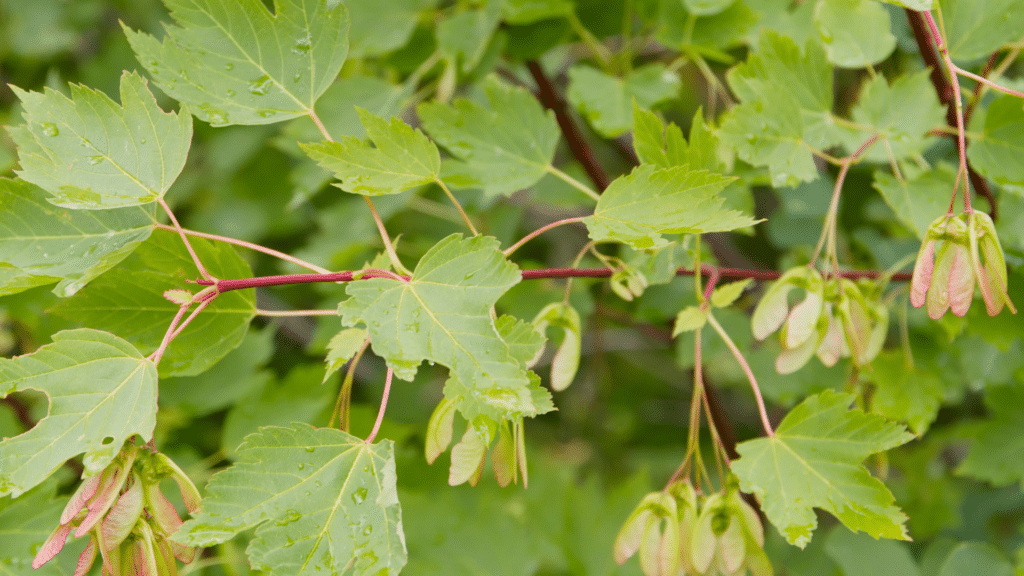
Michigan’s climate and soil chemistry support a wide range of maple species, from large, long-lived shade trees to smaller, ornamental varieties. Some are native and play an important ecological role in local forests, while others have been introduced to the state and are now widely planted in residential and urban landscapes.
Below is a breakdown of the most common maple trees you’re likely to encounter across southeastern Michigan, starting with native species and then moving into commonly planted exotic varieties.
Native Michigan Maple Species
Several maple species are native to Michigan, and these trees play an important role in local forests, wildlife habitat, and residential landscapes.
- Sugar Maple (Acer saccharum): A large, long-lived native tree that can reach 60 to 80 feet tall, the sugar maple is best known for its brilliant fall color and role in maple syrup production. It thrives in well-drained soils and is a dominant species in Michigan’s hardwood forests, but it can be sensitive to soil compaction.
- Red Maple (Acer rubrum): Highly adaptable and widespread across eastern North America, red maples typically reach about 40 to 70 feet in height and tolerate a wide range of soil conditions, including wet sites. It’s popular in landscapes for its fast growth and red fall color, though it can develop structural issues.
- Silver Maple (Acer saccharinum): A fast-growing native that can exceed 70 feet in height, the silver maple is commonly found in floodplains and along waterways. While it provides quick shade, it is known for weak wood and brittle branching, which can lead to a higher storm damage risk.
- Boxelder (Acer negundo): Technically a maple despite its name and compound leaves, the boxelder (which is sometimes called the ash-leaf maple) is a smaller, short-lived tree that rarely exceeds 50 feet in height. It is highly tolerant of poor conditions and disturbed sites but is prone to structural problems.
- Black Maple (Acer nigrum): Closely related to sugar maple and sometimes considered a subspecies of it, the black maple reaches about 80 feet in height and prefers rich, moist soil. It is slightly more tolerant of heat and drought than sugar maple, making it a good fit for certain Michigan sites.
Exotic Maple Species in Michigan
Michigan homeowners may also encounter (or even seek out) several nonnative maple species, many of which were introduced for their ornamental value, fast growth, or tolerance of urban conditions.
- Norway Maple (Acer platanoides): A widely planted European species that grows up to 60 feet tall, Norway maple is valued for its dense shade and tolerance of urban conditions. However, it can be invasive in some areas and tends to outcompete native understory plants due to its heavy canopy and shallow roots.
- Amur Maple (Acer ginnala): A smaller, ornamental species typically reaching 15 to 25 feet in height, the Amur maple is often planted in small spaces. Native to Asia, it is prized for its bright red fall color, but it is considered invasive in parts of the Midwest.
- Japanese Maple (Acer palmatum): A popular ornamental tree usually staying under 25 feet tall, Japanese maple is known for its delicate leaves and striking form. It requires protected sites and well-drained soil, as it is less tolerant of harsh Michigan winters and environmental stress than our native species.
- Sycamore Maple (Acer pseudoplatanus): A large European species that can reach 80 feet in height, the sycamore maple is occasionally planted as a shade tree. It is tolerant of wind and poor soil, but it can become naturalized and spread in some environments.
- Tatarian Maple (Acer tataricum): Another relatively small tree, the Tatarian maple typically grows to about 15 or 20 feet in height. Valued for its hardiness and adaptability, this species has invasive tendencies in certain regions and can spread beyond intended planting areas.
Caring for Maple Trees
Whether you have maple trees growing naturally in your yard or you’re considering planting one, it’s important to understand the soil conditions, water needs, sunlight exposure, and site limitations each species prefers. We’ll provide some basic care information for common Michigan maple trees below.
Sugar Maple
- Sun Exposure: Full sun to partial shade
- Soil Preference: Deep, rich, well-drained loam
- Moisture Requirements: Moderate
- Salt Tolerance: Low
- Pollution Tolerance: Low to moderate
- Proper pH: Slightly acidic to neutral (5.5 to 7.0)
Red Maple
- Sun Exposure: Full sun to partial shade
- Soil Preference: Adaptable; prefers moist, slightly acidic soils
- Moisture Requirements: Moderate to high
- Salt Tolerance: Low to moderate
- Pollution Tolerance: Moderate
- Proper pH: Acidic to neutral (4.5 to 7.0)
Silver Maple
- Sun Exposure: Full sun
- Soil Preference: Moist, rich soils; tolerates wet sites
- Moisture Requirements: Moderate to high
- Salt Tolerance: Low
- Pollution Tolerance: Moderate
- Proper pH: Slightly acidic to neutral (5.5 to 7.0)
Boxelder
- Sun Exposure: Full sun to partial shade
- Soil Preference: Highly adaptable; tolerates poor or disturbed soils
- Moisture Requirements: Low to moderate
- Salt Tolerance: Moderate
- Pollution Tolerance: Moderate to high
- Proper pH: Slightly acidic to alkaline (6.0 to 8.0)
Black Maple
- Sun Exposure: Full sun to partial shade
- Soil Preference: Deep, fertile, well-drained soils
- Moisture Requirements: Moderate
- Salt Tolerance: Low
- Pollution Tolerance: Low to moderate
- Proper pH: Slightly acidic to neutral (5.5 to 7.0)
Norway Maple
- Sun Exposure: Full sun to partial shade
- Soil Preference: Adaptable; tolerates compacted urban soils
- Moisture Requirements: Moderate
- Salt Tolerance: Moderate
- Pollution Tolerance: High
- Proper pH: Slightly acidic to alkaline (6.0 to 8.0)
Amur Maple
- Sun Exposure: Full sun to partial shade
- Soil Preference: Well-drained soils; adaptable once established
- Moisture Requirements: Low to moderate
- Salt Tolerance: Moderate
- Pollution Tolerance: Moderate
- Proper pH: Slightly acidic to alkaline (6.0 to 8.0)
Japanese Maple
- Sun Exposure: Partial shade to filtered sun
- Soil Preference: Moist, well-drained, organic-rich soils
- Moisture Requirements: Moderate
- Salt Tolerance: Low
- Pollution Tolerance: Low to moderate
- Proper pH: Slightly acidic (5.5 to 6.5)
Sycamore Maple
- Sun Exposure: Full sun to partial shade
- Soil Preference: Adaptable; tolerates heavier soils
- Moisture Requirements: Moderate
- Salt Tolerance: Moderate
- Pollution Tolerance: Moderate to high
- Proper pH: Slightly acidic to alkaline (6.0 to 8.0)
Tatarian Maple
- Sun Exposure: Full sun to partial shade
- Soil Preference: Adaptable; prefers well-drained soils
- Moisture Requirements: Low to moderate
- Salt Tolerance: Moderate
- Pollution Tolerance: Moderate
- Proper pH: Slightly acidic to alkaline (6.0 to 8.0)
Tree-Selection Pro-Tip: Salt tolerance is primarily an issue for trees planted in spaces located near roads and driveways. If you intend to plant a maple in the middle of your backyard, you can often select a species that won’t tolerate much salt exposure.

Pruning Maple Trees
Pruning is important and often helps maintain the health, structure, and safety of maple trees. But it’s also one of the most common ways trees are unintentionally damaged. While minor cleanup is fine, most pruning — especially anything involving larger limbs or structural decisions — should be handled by a professional arborist.
Here are a few key pruning principles Michigan homeowners should keep in mind when caring for maple trees:
- Timing matters: Maples can “bleed” sap if pruned in late winter or early spring; pruning during the summer or early winter is typically best, depending on your goals.
- Focus on structure early: Species like red and silver maple benefit from early pruning to reduce weak branch attachments and future failure risk.
- Avoid over-pruning: Removing more than about 25% of a tree’s canopy can stress it and lead to poor growth or increased pest and pathogen vulnerability.
- Make proper cuts: Incorrect cuts can lead to decay and long-term structural issues, so be sure that you use the correct techniques and the proper tools for the job.
- Know your limits: Large limbs, trees near structures, or anything requiring climbing should always be left to a qualified arborist.
Pests and Diseases of Maple Trees
Maple trees are susceptible to a range of insects and diseases — especially when they’re stressed by poor site conditions, drought, or soil compaction. While many issues are cosmetic, others can lead to structural decline or even tree failure if left unaddressed.
The key is knowing what to watch for and acting early when problems arise. Below are some of the most common pests and diseases affecting maple trees in Michigan.
Asian Longhorned Beetle
One of the most serious threats to maple trees, the Asian longhorned beetle is an invasive wood-boring insect that can kill otherwise healthy trees. Its larvae tunnel deep into the trunk and branches, disrupting water and nutrient transport and often leading to structural failure.
This pest is subject to strict quarantine and eradication efforts in the U.S., and suspected infestations should be reported immediately. Look for perfectly round exit holes, sawdust-like frass, and dieback in the upper canopy.
Maple Gall Mites
Tiny insects, maple gall mites, cause small bumps or bladder-like growths on maple leaves. While the damage can look alarming, it is almost always cosmetic and rarely impacts the long-term health of the tree.
Treatment is typically unnecessary, though severe or repeated infestations may justify preventative applications early in the growing season. Most established trees tolerate these mites without issue.
Aphids
Aphids and other sap-sucking insects frequently feed on maple leaves and stems, particularly on younger trees. While they rarely cause serious harm on their own, heavy infestations can lead to leaf curling, reduced vigor, and sticky honeydew deposits.
This honeydew can encourage sooty mold growth, which coats leaves and reduces photosynthesis. Natural predators like lady beetles often help control populations, and insecticidal soaps can be effective when needed.
Tar Spot
A very common fungal disease, tar spot causes distinctive black, tar-like spots on maple leaves, especially on Norway, red, and silver maples. The disease is primarily cosmetic and typically appears later in the growing season.
While it rarely harms the tree, repeated infections can cause premature leaf drop. Raking and removing fallen leaves can help reduce reinfection the following year by limiting fungal spores in the environment.
Verticillium Wilt
A serious soil-borne disease, Verticillium wilt affects the tree’s vascular system and can cause branch dieback, leaf scorch, and sudden decline. It can infect many maple species, though some (like Norway maple) show more resistance to the disease than others.
There is no reliable cure for verticillium wilt once a tree is infected, and management typically focuses on maintaining vigor and removing severely affected branches. In advanced cases, removal may be necessary.
Anthracnose
Anthracnose is the term applied to a group of fungal diseases that affect many hardwoods, including maples, and it is most common during cool, wet springs. Symptoms include irregular brown blotches on leaves, leaf curling, and early defoliation.
While it can make trees look unhealthy, established maples usually recover with a new flush of growth. Proper pruning to improve airflow, while removing fallen leaves promptly, can help reduce the severity of the disease in subsequent years.
Cankers
Cankers on maple trees appear as sunken, discolored areas on branches or trunks. Often caused by fungal pathogens entering through wounds, cankers may crack, ooze sap, or lead to dieback beyond the infected section.
Management typically involves pruning out affected branches and preventing injury to the tree. If cankers develop on the main trunk, the tree will likely die or require removal far sooner than would normally be expected.
Root Rot
Fungal root diseases, including Armillaria root rot, can attack maples growing in poorly drained sites. These pathogens decay the root system, leading to instability, decline, and eventual failure.
There is no effective treatment for most root rots, and infected trees often require removal. Watch for symptoms like thinning canopy, dieback, and the presence of mushrooms at the base of the tree

Maple Trees in Michigan: FAQ
Maple trees are a staple of many Michigan landscapes, but homeowners often have questions about them. Here are answers to some of the most common questions we hear.
How fast do maple trees grow?
The growth rate of maples varies by species. Silver and red maples are relatively fast growers, while sugar and black maples grow more slowly. Site conditions like soil quality, moisture, and available space also play a major role.
Which maple tree is best for my yard?
The right maple tree species for your property depends on the space, soil, and your goals. Larger species like sugar or silver maple need room to grow, while Amur and Japanese maple are better suited for compact landscapes.
When is the best time to prune a maple tree?
Maples can be pruned during winter dormancy or in mid- to late summer, depending on the objective. Avoid heavy pruning in early spring due to sap flow, and always hire an arborist to remove large limbs or prune anything above shoulder height.
Why is my maple tree dripping sap?
Sap flow — often called “bleeding” — is common in late winter and early spring, especially after pruning. While it can look concerning, it’s usually not harmful to the tree.
What are the black spots on my maple leaves?
Those are likely caused by tar spot, a common fungal disease that looks dramatic but is mostly cosmetic. Raking and removing fallen leaves can help reduce reinfection.
Do maple tree roots damage foundations or driveways?
Maple roots don’t “seek out” structures, but they can cause issues if planted too close to buildings or hardscapes. Over time, large surface roots may contribute to sidewalk or driveway lifting, especially with species like silver or Norway maple.
When should I call an arborist for my maple tree?
If you notice dead branches, cracks, leaning, root issues, or signs of disease, it’s a good idea to have it evaluated. Early assessment can help prevent more serious (and costly) problems later on.
Longtree Tree Service: Providing the Care Your Maple Trees Need
No matter what kind of maples you have, you’ll need professional assistance to keep them looking their best. This means partnering with a team of professional arborists, who can provide the pruning and plant health care services they need.
Whether you need a Japanese maple pruned in Birmingham, an old silver maple removed in Detroit, or a simple arborist consultation in Lathrup Village, we’d love to help keep your maple trees healthy and beautiful. Contact us today to schedule an arborist’s evaluation and ensure your trees get the support they need.
Sources and References
- Michigan Department of Natural Resources – “Sugar Maple”
Provides an overview of sugar maple characteristics, uses, and ecological value, including its importance as the primary source of maple syrup.
https://www.michigan.gov/dnr/education/michigan-species/plants-trees/sugarmaple - Michigan State University Extension – “Red Maple Alternatives for Michigan Landscapes”
Discusses red maple characteristics and suitable alternative species, helping inform species selection and landscape considerations in Michigan.
https://www.canr.msu.edu/home_gardening/uploads/files/RedMaple-AltTrees.pdf - U.S. Forest Service – “Sugar Maple (Acer saccharum) – Silvics of North America”
Provides detailed scientific information on sugar maple distribution, site preferences, growth, and ecological relationships across its native range.
https://www.srs.fs.usda.gov/pubs/misc/ag_654/volume_2/acer/saccharum.htm - Michigan State University Extension – “Tar Spot of Maple”
Explains the biology, symptoms, and management of tar spot disease, including its lifecycle and generally limited impact on tree health.
https://www.canr.msu.edu/resources/tar_spot