Skip to content
Michigan trees are vulnerable to an assortment of diseases and pests, ranging from deadly to benign. And while emerald ash borer, Dutch elm disease, oak wilt, and other potentially fatal threats tend to attract most of the attention, it’s also important for area homeowners and property managers to familiarize themselves with some of the lower-level threats.
Anthracnose is a great example of this. Though it can kill trees in some cases, it typically resolves on its own within a few months. But in the meantime, it can leave your trees looking horrible and cause you to worry.
We’ll try to help by explaining everything you need to know about this tree pathogen and outlining the steps you can take to prevent it from happening.
Anthracnose in Michigan: The Basics
Anthracnose (which is also called leaf blight by some) is not a single disease; it’s actually a bit of a catch-all term applied to a number of different fungal pathogens.
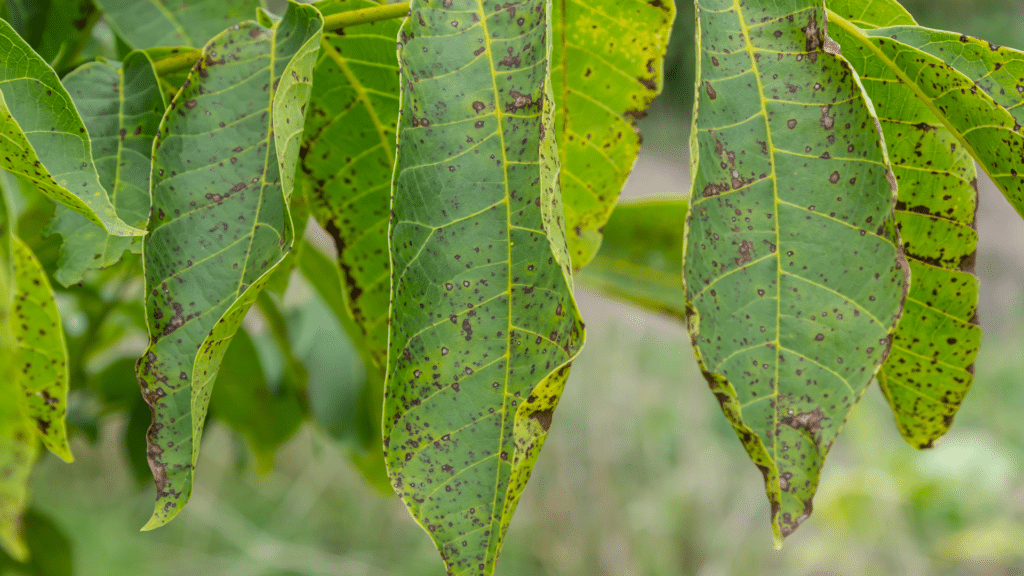
Some species attack beans, others attack fruits, and some attack trees. Those that affect Michigan’s trees usually cause symptoms like foliar discoloration and distortion, as well as premature leaf drop, though some species can also infect a tree’s twigs. Most of these fungi are species-specific, meaning that an infected maple won’t cause a nearby oak to become sick.
Anthracnose fungi tend to be most problematic during cool, wet springs. By early to mid-summer, affected trees may have lost a significant portion of their leaves.
Fortunately, otherwise healthy, vigorous trees will generally recover and produce new leaves to replace those lost. However, repeated attacks in subsequent years can weaken trees, leaving them vulnerable to other pests, pathogens, or environmental stresses.

Michigan’s Most Vulnerable Trees
While many trees are vulnerable to some type of anthracnose infection, a relative handful of Michigan species are at significantly higher risk. A few of the most important examples include:
- The American sycamore (Platanus occidentalis) is one of the most susceptible shade trees in Michigan. Anthracnose infections can kill emerging buds and young leaves, cause twig dieback, and even lead to structural deformities such as witches’ brooms. The disease is often more damaging to sycamore than to other hosts because it attacks buds and twigs as well as leaves.
- Many oaks (Quercus spp.) are affected by anthracnose fungi, but white oaks (Q. alba) and bur oaks (Q. macrocarpa) are especially vulnerable. Symptoms in oaks tend to include leaf blotches and, in some cases, twig dieback. Severe, repeated infections during wet springs can weaken oaks and predispose them to other stresses.
- Maples (Acer spp.), including sugar (A. saccharum), red (A. rubrum), silver (A. saccharinum), Norway (A. platanoides), and Japanese maples (A. palmatum), are all susceptible to anthracnose in Michigan. During severe outbreaks, young leaves may experience significant defoliation and even minor twig dieback.
- Ashes (Fraxinus spp.) can also be affected by anthracnose, and while some species show partial tolerance, infections can still cause leaf spots and early leaf drop. The impact of the disease becomes more significant when ash trees are already stressed by other factors, such as drought or emerald ash borer infestations.
- Most elms (Ulmus spp.) are susceptible to anthracnose, with leaf blotches and defoliation commonly occurring during cool, wet springs. Anthracnose can add to overall stress in elms, particularly in trees already challenged by pests or diseases such as Dutch elm disease.
Preventing Anthracnose in Michigan
While anthracnose infections are rarely fatal and usually resolve on their own within a few weeks or months, some trees do become so stressed that they can start to decline. So, it is wise to take whatever steps you can to prevent infections. Unfortunately, treatments can’t reverse anthracnose symptoms that have already appeared.
A few helpful steps include:
- Reduce overwintering spores by cleaning up fallen leaves in autumn, especially under susceptible trees such as maples, oaks, and sycamores, since the fungi survive in infected debris.
- Prune out dead or infected twigs and branches during dry weather to improve air circulation and reduce moisture in the canopy, which will help slow fungal spread.
- Promote overall tree health by watering properly during dry periods, applying mulch to protect the roots, and avoiding soil compaction, as healthy trees are better able to tolerate infection.
- Avoid overhead watering and ensure sprinklers aren’t spraying the canopy, since prolonged leaf wetness in spring encourages anthracnose development.
- Select resistant or well-adapted species when planting, particularly in sites with poor air movement or a history of disease problems.
- Monitor trees closely in spring, especially during extended periods of rain and cool temperatures, so symptoms are identified early and management decisions can be made promptly.
Additionally, you can consider fungicide treatments for high-value or repeatedly affected trees. Just understand that these treatments will only help prevent infections; they will not help with existing infections. Accordingly, fungicides must be applied at bud break in early spring, before symptoms appear.
Some of the most common options available include:
- Chlorothalonil is a common broad-spectrum fungicide used to protect trees from anthracnose when applied early in spring before symptoms appear.
- Propiconazole is a systemic fungicide that moves within the tree to protect new growth and is often used on trees with a history of severe anthracnose.
- Thiophanate-methyl is another fungicide option that can help prevent anthracnose when applied preventively at the proper time.
- Azoxystrobin is found in some ornamental disease control products and provides preventive protection against anthracnose and other fungal leaf diseases.
- Copper-based fungicides may be used as protective treatments, although they must be applied carefully to avoid plant injury and are generally less effective once infection has begun.
Some of these fungicides are available to homeowners and property managers, while others are only available to licensed applicators. However, because of the complexity of treatment dosages, timing, and coverage requirements, it’s generally wise to leave all fungicide treatments to the professionals.
Shade Tree Anthracnose and Leaf Blight in Michigan: FAQ
Still have questions about anthracnose? Need to learn more about the timing or symptoms it causes? We’ve rounded up a few common questions and answered them below.
What time of year does anthracnose occur?
Anthracnose generally afflicts trees in the spring — especially when the weather is cool and wet.
How do you get rid of anthracnose?
You can’t stop anthracnose once the infection starts, so prevention is the best approach. Rake up fallen leaves in the fall, promote overall tree health, and avoid spraying the canopy with water to help reduce the chances of it occurring next year.
Can anthracnose spread to other trees?
Anthracnose can spread to other trees of the same species (or closely related species within the same genus), but it won’t jump from ashes to maples or dogwoods to sycamores.
Can a tree recover from anthracnose?
Yes, trees can recover from anthracnose, and most do. Many trees will produce replacement leaves later in the summer.
What dogwoods are resistant to anthracnose?
The Japanese dogwood (Cornus kousa) is resistant to anthracnose and makes a good alternative to the flowering dogwood (Cornus floridana).
Does anthracnose come back every year?
Anthracnose may not necessarily come back every year, but repeated, annual infections are certainly possible, damaging to trees, and worthy of avoiding.
Let Longtree Tree Service Help Keep Your Trees Healthy
If you suspect that your trees are suffering from anthracnose (or any other health issue), you’ll want to get professional plant health care services immediately. As is the case with most diseases, prompt action will give your trees a much better chance of recovery and long-term health.
The Longtree Tree Service team would love to provide you with this kind of expert guidance and support. From Bloomfield Hills to Oak Park and everywhere in between, we’ve been serving the Detroit Metropolitan area since 2019, while making a name for ourselves as the tree-care team homeowners and property managers can count on.
Contact us today to schedule your free consultation and get the kind of help you deserve.
Sources & References
- Michigan State University Extension – “Anthracnose Diseases of Shade Trees”
An extension resource describing the symptoms, causes, and management practices for anthracnose diseases affecting shade trees.
https://www.canr.msu.edu/resources/anthracnose_diseases_of_shade_trees - Michigan State University Extension – “Anthracnose”
A plant pathology fact sheet outlining anthracnose disease characteristics and recommendations for control on various hosts.
https://www.canr.msu.edu/resources/anthracnose-1 - University of Minnesota Extension – “Anthracnose on Trees and Shrubs”
An educational overview explaining anthracnose disease identification, host range, and management strategies for trees and shrubs.
https://extension.umn.edu/plant-diseases/anthracnose-trees-and-shrubs - Penn State Extension – “Anthracnose on Shade Trees”
A cooperative extension publication detailing anthracnose symptoms, disease cycle, and treatment options for shade trees.
https://extension.psu.edu/anthracnose-on-shade-trees