Skip to content
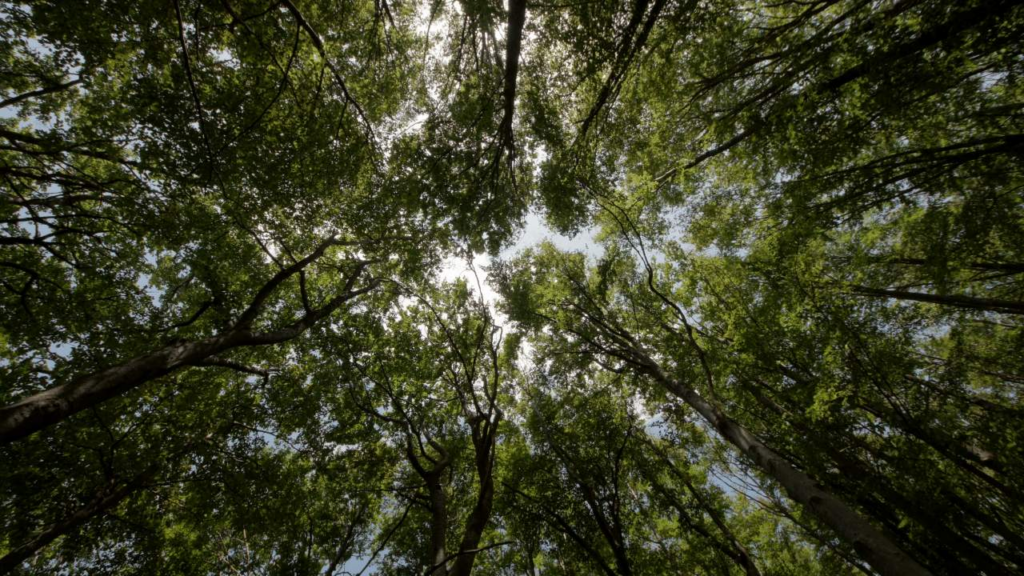
Few shade trees are as stately or beautiful as a mature American beech (Fagus grandifolia).
From their smooth, pale bark to their graceful form to their beautiful canopies, there are certainly plenty of things to love about these remarkable trees. Fortunately for those living in Michigan, beech trees are quite common in our area, with more than 32 million growing within our state’s borders according to the Michigan Invasive Species Program.
However, our beloved beech trees are currently under attack by something called Beech Bark Disease, and an estimated 2.5 million beeches have already died from the disease.
We’ll lay out what all of this means for Michigan homeowners, share some of the signs and symptoms the disease causes, and outline the treatments and mitigation strategies you may want to consider.
What Is Beech Bark Disease?
Unlike many tree diseases, which are caused by a single organism, Beech Bark Disease (BBD) is caused by a combination of two different things: a tiny scale insect and a fungus.
- Beech Scale: Beech scales are tiny insects measuring less than 1 millimeter in length. Unusual little creatures, these insects have no legs or wings as adults, and their bodies are covered in a layer of wool-like wax. Beech scales feed on the sap found in the tree’s inner bark, and the wounds created serve as an entry point for the fungus. Beech scales are an invasive species hailing from Europe, first found in Michigan in 2000.
- Nectria Fungus: Three different species of Nectria fungus can attack beech trees that have scale infestations, including at least one species that is native to our state. Often, trees suffering from Beech Bark Disease are infected by more than one Nectria species. These fungi kill portions of the infected tree’s wood, sometimes causing cankers or even girdling the tree entirely.
Scale insect infestations can weaken beech trees, but they rarely kill the trees outright. Trees usually die only after one of the three fungi moves in, which happens after insects have been present for three to six years.
Most trees that contract beech bark disease eventually die, though the timeline can vary; some beeches die only a few years after being colonized by Nectria fungi, while others may linger for up to a decade. Additionally, a small number of beeches (thought to be between 1% and 5%) appear resistant to the disease.
Beech Bark Disease Symptoms in Michigan
Only a certified arborist can positively identify Beech Bark Disease, but there are a number of symptoms caused by the disease, which homeowners may be able to spot. If you have beech trees in your yard, be sure to inspect them regularly for signs of:
- Beech scale insects, which often look like white, woolly patches on the bark
- Small yellow or red spots under the bark where scales feed
- Cracked, rough, or blistered bark
- Cankers forming on the trunk
- Black or dark fungal fruiting bodies on the bark
- Bark deformations or areas that appear either sunken or swollen
- Thinning canopies
- Yellowing foliage
- Premature leaf drop
- Dead branches in the crown
- Reduced vigor and slowed growth
Many of these symptoms can be caused by other pests or pathogens, so you’ll want to contact an arborist and schedule an in-person examination as soon as possible.

Where Is Beech Bark Disease Found in Michigan?
Currently, the disease is found primarily in the eastern portion of the Upper Peninsula, though it is also found along the western shore of the Lower Peninsula. The disease causes the most damage in large forests containing significant beech populations, but it can also affect individual trees growing on residential properties.
Unfortunately, both beech scale and Nectria fungi are small enough that they can be carried by wind currents. This means that the disease spreads fairly quickly (about 6 miles per year), ultimately meaning that every beech in the state is at risk.
To help reduce the rate at which the disease spreads, residents are encouraged to avoid moving beech firewood from place to place.
Beech Snap: A Significant Hazard Caused by Beech Bark Disease
Because it kills large numbers of beeches growing in managed forests, Beech Bark Disease is primarily a problem that affects timber operations. However, it can also cause a serious problem for homeowners.
In addition to killing any beech on your property, the disease tends to cause a problem called “beech snap.”
As the fungus degrades the woody tissue inside the tree’s trunk, it becomes progressively weaker. Eventually, many afflicted beeches — especially those that retain full, wind-catching canopies — end up snapping in half. This can occur quite suddenly, putting both your home and family at risk.
This is part of the reason it is so important to contact a certified arborist anytime you suspect that one of your beech trees is being attacked by scale insects or suffering from Beech Bark Disease.
Beech Bark Disease Treatments
Unfortunately, it is not economically viable for landowners to treat large numbers of beech trees growing on forested lands. That’s why many state officials, researchers, and timber managers are doing everything possible to establish beech tree lineages that are resistant to the disease.
However, there are a few treatments and mitigation strategies that are appropriate and practical for individual trees growing on residential or commercial properties, as well as those in high-traffic areas of public parks.
For example, horticultural oil sprays can reduce scale populations on trees when applied in the early spring or late fall. Additionally, systemic insecticides containing imidacloprid or dinotefuran can be administered to kill scale insects. You can even manually remove scale insects (at least on the lower portions of a tree’s trunk) by scrubbing the affected area with a stiff brush and low-pressure water from a garden hose.
Trees that are already suffering from an advanced case of Beech Bark Disease should be removed to help reduce hazards and further spread, and those trees you are attempting to treat or save should be provided with optimal care. This means covering their root zones with an organic mulch, providing supplemental water during extended droughts, and protecting the tree from stress or damage.

Beech Bark Disease in Michigan: FAQ
Still have questions about Beech Bark Disease in Michigan? We’ve rounded up a few of the most common questions we hear from homeowners and answered them below.
What is killing the beech trees in Michigan?
There are actually two diseases killing beech trees in Michigan: Beech Leaf Disease and Beech Bark Disease. The former is fairly widespread, while the latter is established in some places but hasn’t yet spread throughout the state.
How do you treat beech tree bark disease?
The best ways to treat beech bark disease are supporting a tree’s overall health, manually removing scale insects, administering systemic insecticides, and spraying horticultural oils on the tree.
How is beech bark disease spread?
Beech Bark Disease is spread through a combination of scale insects, which damage the bark, and then Nectria fungi, which colonize the damaged wood tissue. Both the insects and fungi spread easily through the environment, as they’re both small enough to float on air currents at various stages in their respective life cycles.
What does beech bark disease look like?
Beech Bark Disease can cause a variety of symptoms, ranging from canopy thinning and yellow foliage to patches of white, woolly-looking areas on the trunk and branches. You may also see dark-colored fungal fruiting bodies on the bark.
What is the average lifespan of a beech tree?
In some cases, beech trees are capable of living for 400 years or more. However, most beeches will not reach such an advanced age, and the average lifespan is probably between 100 and 250 years.
What is the difference between beech leaf disease and beech bark disease?
Beech Leaf Disease is caused by a small worm (nematode) that damages leaf buds, while Beech Bark Disease is caused by a combination of scale insects and Nectria fungi. Both diseases are usually fatal and present in Michigan.
How do you know if a beech tree is dying?
There are a number of symptoms that can indicate a beech tree is dying, including the presence of large cankers of fungal fruiting bodies, as well as premature leaf drop, canopy thinning, or crown dieback.
Get Your Beech Trees the Help They Need!
Don’t wait until you’re staring at white woolly patches on your beech tree to get help. To provide your beech tree with the best chance of survival, you’ll want to go ahead and have an ISA-certified arborist inspect it. The arborist can not only verify whether or not the tree is suffering from Beech Bark Disease but also provide proactive recommendations for keeping it healthy and preventing infection from occurring.
The Longtree Tree Service team would love to help you care for your beech trees. Contact us now to schedule a free estimate and provide your trees with the best chance of remaining healthy for decades to come.
Sources & References
- Michigan Department of Natural Resources – “Beech Bark Disease”
Provides an overview of beech bark disease in Michigan, including identification, impacts, and reporting guidance for landowners and forestry professionals.
https://www.michigan.gov/invasives/id-report/disease/beech-bark-disease - Michigan State University Extension – “Is It Beech Bark Disease?”
Explains symptoms, disease progression, and how to distinguish beech bark disease from similar tree issues, along with management recommendations.
https://www.canr.msu.edu/news/is_it_beech_bark_disease - Michigan State University Extension – “Beech Bark Disease in Michigan”
Offers a detailed, research-based guide to beech bark disease, including biology, spread, identification, and long-term management strategies for affected forests.
https://www.canr.msu.edu/uploads/files/e2746.pdf - Bay County (MI) Forest Sustainability Program – “Beech Bark Disease (BBD)”
Summarizes local impacts of beech bark disease, identification characteristics, and recommended mitigation practices for homeowners and land managers.
https://www.baycountymi.gov/ForestSustainability/Beech-Bark-Disease-BBD