Skip to content

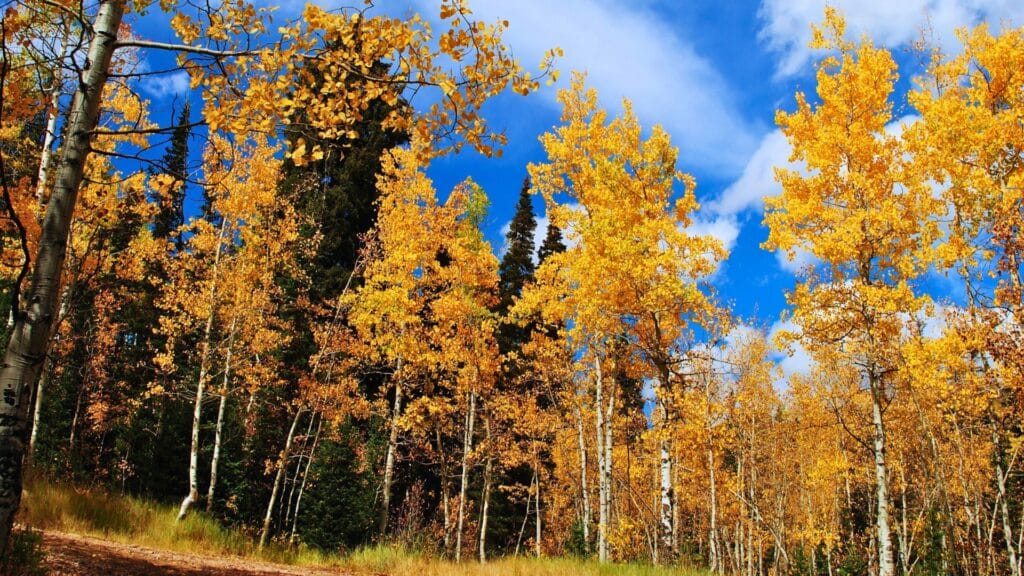
Known locally as “popples” or “poplars,” quaking aspens (Populus tremuloides) are among Michigan’s most familiar native trees. Unfortunately, they’re particularly vulnerable to hypoxylon canker — a leading cause of premature aspen death in the Great Lakes region.
Below, we’ll explain what hypoxylon canker is, share some tips for recognizing it, and outline the steps you can take to protect your aspens.
What Is Hypoxylon Canker?
Hypoxylon canker is a fungal disease of aspens and closely related poplars. It’s caused by Entoleuca mammata, a fungus formerly known as Hypoxylon mammata. The disease’s common name refers to the sunken lesions (cankers) it causes in the bark.
Intact aspen bark generally resists infection, but the fungus can enter through dying twigs, cracks at branch unions, and wounds made by insects that feed on or lay eggs in young branches.
In many cases, the disease causes trunk cankers that can girdle and kill an aspen within 3 to 8 years. The fungus also colonizes and decays the underlying sapwood, potentially weakening the trunk enough that the tree breaks at the canker before it dies.
Unlike some other canker-causing fungi, E. mammata produces toxins that inhibit callus formation around infected tissues. Consequently, Hypoxylon cankers typically lack the pronounced concentric ridges associated with target-shaped cankers.
Not All Hypoxylon Cankers Are the Same
You may also see hypoxylon canker described as a disease of oaks (Quercus spp.) and other hardwoods. That disease, now commonly called biscogniauxia canker, is caused by different fungi and primarily affects trees weakened by drought or other stress.
Signs & Symptoms of Hypoxylon Canker
Hypoxylon canker changes as the infection progresses, so what you notice on your aspen depends partly on how long the fungus has been present. With that said, any of the following symptoms may indicate an infection and warrant a professional evaluation:
- Yellow-Orange Bark: Young cankers develop yellow-orange to orange-brown discoloration that contrasts with the aspen’s normally pale, greenish-gray bark.
- Wavy Canker Margins: Cankers are generally round to oblong with irregular, wavy edges. They often develop near branch stubs, branch unions, wounds, or galls.
- Salt-and-Pepper Mottling: As cankers age, the bark blisters and peels away in patches, revealing a distinctive black-and-white mottled appearance.
- Gray Pegs & Black Crusts: Small gray, peg-like structures may appear beneath blistered bark, and advanced infection may yield clusters of hard, dark fungal structures.
- Small, Yellowing Leaves: Leaves on infected branches may remain small, turn yellow or brown, and sometimes cling to the branches after dying.
- Insect & Woodpecker Holes: Decaying wood beneath older cankers can attract wood-boring insects and woodpeckers, leaving visible holes and damage.
The mottled, salt-and-pepper appearance is one of the disease’s most distinctive identifying features.
Because infected aspens can break where a canker has weakened the trunk, it’s important to have an ISA-certified arborist evaluate your tree if you notice a canker on the main trunk. This is especially true of trees growing near homes, driveways, or other high-traffic areas.

How Does Hypoxylon Canker Spread?
The fungus spreads to new trees by producing spores, which become airborne after rainy weather. When they land on susceptible tissue, they can trigger an infection, provided that the conditions are damp and temperatures are warm, generally above 60°F.
Once established, the fungus colonizes woody and bark tissues, killing living cells and producing an expanding canker. As the infection progresses, the canker changes in appearance as additional tissues die and the fungus develops reproductive structures.
Which Trees Are Vulnerable to Hypoxylon Canker?
Quaking aspen is by far the most common host of hypoxylon canker, and the disease is especially damaging to young aspen stands.
However, resistance varies among quaking aspen clones, while differences in growing conditions and exposure can influence infection rates among individual trees.
Despite being closely related to quaking aspens, balsam poplars (Populus balsamifera) and eastern cottonwoods (Populus deltoides) are rarely affected.
A handful of other relatives are occasionally affected, though, including:
- Bigtooth aspen (Populus grandidentata)
- European aspen (Populus tremula) and its hybrids
- White poplar (Populus alba) and its hybrids
- Black poplar (Populus nigra) hybrids
- Violet willow (Salix daphnoides)
The fungus can also live on maples (Acer spp.), oaks (Quercus spp.), birches (Betula spp.), and several other shade trees, but it doesn’t cause the characteristic aspen canker disease in these species.
Aspens vs. Paper Birches: ID Tips
Aspens are often mistaken for paper birch (Betula papyrifera) because of their light-colored bark. But birch bark typically peels in papery sheets, while quaking aspens have rounded leaves that flutter on flattened stalks.
Managing Hypoxylon Canker on Your Aspens
There are no fungicides that prevent or cure hypoxylon canker. Management instead focuses on removing infected branches when possible, addressing structural hazards, and reducing the risk of new infections.
Pruning Infected Branches
When hypoxylon canker is confined to a branch, pruning may remove the infection before it reaches the main trunk. But it’s important to prune aspens during dry weather whenever possible, since the fungus releases spores after rain.
Removing infected branches also eliminates cankers that could otherwise continue producing spores. But pruning won’t save a tree once the infection has reached the main trunk.
Removing Aspens with Trunk Cankers
A canker on the main trunk can’t be pruned away. As the infection advances, decay can weaken the wood enough that the tree breaks in the wind, potentially damaging property or injuring someone nearby.
If an infected aspen stands within reach of your home, driveway, or another frequently used area, removal may be the safest option. An ISA-certified arborist can assess the canker, the tree’s structural condition, and the potential consequences of failure.
Preventing New Infections
Because hypoxylon canker commonly enters through wounds and damaged tissue, prevention starts with protecting your aspens from injury. Keep mowers and string trimmers away from trunks, and avoid unnecessary damage to branches.
Additional habits that can further support healthier aspens include:
- Supplemental Water During Droughts: Give your aspens supplemental water during extended dry spells to help reduce moisture stress.
- Mulch the Root Zone: Apply 2 to 4 inches of organic mulch to help conserve soil moisture and keep lawn equipment away from the trunk.
- Go Easy on Nitrogen: A Michigan field study found that nitrogen fertilization favored hypoxylon infection and canker development during summer, so avoid unnecessary fertilization.
- Plan Plantings Carefully: Avoid planting susceptible aspens, poplars, or willows near trees with existing hypoxylon infections.
Good care supports your aspens’ overall health, but it can’t guarantee protection against hypoxylon canker. Inspect trees regularly so you can recognize infected branches while pruning may still help.

Hypoxylon Canker in Michigan’s Forests
Aspens are an important part of northern Michigan’s forests, providing valuable wildlife habitat and wood for the state’s pulp and paper industry. But they’re also vulnerable to numerous pests and diseases, including hypoxylon canker.
The disease is native to North America and is among the most damaging diseases of aspen in the eastern and central parts of the continent. A historical study of Michigan, Minnesota, and Wisconsin estimated that hypoxylon canker killed 1 to 2 percent of the region’s aspen volume annually.
Research shows that hypoxylon cankers are more common in open stands and along forest edges than in dense forest interiors. That’s worth keeping in mind if your aspens grow in an open yard or along the edge of a wooded lot.
Hypoxylon Canker in Michigan: FAQ
Finding a suspicious canker on your aspen can leave you wondering whether the tree can recover, whether it’s safe, and what the infection means for nearby trees. Here are answers to those and other common questions about hypoxylon canker in Michigan.
Can hypoxylon canker be cured?
No. There are no fungicides that cure or prevent hypoxylon canker. However, pruning infected branches during dry weather may remove the disease before it reaches the trunk.
Will hypoxylon canker kill my aspen?
Often, if the infection reaches the trunk. A trunk canker commonly girdles and kills an aspen within 3 to 8 years. Branch infections caught early can sometimes be pruned out.
Is an aspen with hypoxylon canker dangerous?
It can be. Hypoxylon canker decays the wood beneath the infected area, and aspens may break at that weakened point. A tree with a trunk canker near your home, driveway, or another frequently used area warrants professional assessment.
Can hypoxylon canker spread to my other trees?
Yes, if they’re susceptible hosts. Airborne spores can infect other aspens and certain poplars and willows when conditions favor infection. The fungus can also live on maples, oaks, and birches without causing the characteristic canker disease.
How is hypoxylon canker different from cytospora canker?
Both diseases cause cankers on aspens and poplars, but they differ in appearance and the conditions that favor infection. Cytospora canker typically affects stressed or injured trees, producing sunken, discolored areas of bark and sometimes small, pimple-like fungal structures. Hypoxylon canker can infect otherwise healthy aspens and develops distinctive yellow-orange margins and salt-and-pepper mottling as the canker ages.
Is hypoxylon canker on oaks the same as hypoxylon on aspens?
No. The oak and hardwood disease once called hypoxylon canker is now known as biscogniauxia canker. It’s caused by different fungi and mainly affects stressed oaks and other hardwoods.
How much does it cost to remove an aspen with hypoxylon canker?
It depends. The cost of removing an aspen with hypoxylon canker varies with the tree’s size, its location, and how close it stands to your home or power lines. A free onsite estimate is the most reliable way to see how a specific tree would be priced.
Let Longtree Tree Service Help Protect Your Aspens
Hypoxylon canker can be easy to overlook until an infected branch dies or a trunk begins to weaken. Recognizing the signs early gives you more options.
Whether you’ve spotted a yellow-orange canker on a branch or you’re worried about an infected trunk near your home, the ISA-certified arborists at Longtree Tree Service can help. We’ll inspect your trees, explain what we find, and recommend the right next step.

Contact us today to schedule your free onsite evaluation.
Sources & References
- University of Minnesota Extension – “Hypoxylon Canker,”
Extension guide covering hypoxylon canker hosts, leaf and bark symptoms by canker age, spore release after rain and infection conditions above 60°F, the 3- to 8-year timeline to girdling, breakage at the infection point, fungus presence on non-host trees, and pruning, removal, and planting recommendations.
https://extension.umn.edu/garden-and-home/yard-and-garden/gardening-in-minnesota/yard-and-garden-problems/hypoxylon-canker - Forest Pathology (Jim Worrall) – “Salt-and-Pepper (Hypoxylon) Canker,”
Forest pathology reference explaining the fungus’s move from Hypoxylon to Entoleuca, its native North American status, wound-based infection, wood decay, the mottled canker appearance, higher incidence in open stands and stand edges, and greater damage in young aspen.
https://forestpathology.org/canker/salt-and-pepper/ - USDA Forest Service (Michael E. Ostry) – “Hypoxylon Canker,”
Forest Service research chapter describing hypoxylon canker as the most damaging canker disease of quaking aspen, including the Lake States estimate of 1–2% annual aspen volume loss (31% of net annual growth).
https://research.fs.usda.gov/treesearch/44036 - USDA Forest Service (Michael E. Ostry & Neil A. Anderson) – “Interactions of Insects, Woodpeckers, and Hypoxylon Canker on Aspen,”
Forest Service research paper documenting the role of insect and other wounds in the hypoxylon canker infection process.
https://research.fs.usda.gov/treesearch/10814 - Michigan Department of Natural Resources & USDA Forest Service – “Michigan Forest Health Highlights 2008,”
State forest health report associating Michigan aspen decline and mortality with hypoxylon canker, alongside drought, forest tent caterpillar and large aspen tortrix defoliation, and other pests and diseases.
https://www.fs.usda.gov/foresthealth/docs/fhh/MI_FHH_2008.pdf - Plant Disease (Teachman et al.) – “Effects of Fertilization on Hypoxylon Canker of Trembling Aspen,”
Michigan field study (with Michigan DNR and Michigan Tech researchers) finding that nitrogen fertilizer favored hypoxylon infection and canker development on aspen during summer.
https://www.apsnet.org/publications/plantdisease/backissues/Documents/1980Abstracts/PD_64_284.htm - Phytopathology (French & Hart, Michigan State University) – “Variation in Resistance of Trembling Aspen to Hypoxylon mammatum Identified by Inoculating Naturally Occurring Clones,”
Michigan State University study showing wide variation in hypoxylon canker resistance among naturally occurring aspen clones.
https://apsnet.org/publications/phytopathology/backissues/Documents/1978Articles/Phyto68n03_485.PDF - Mississippi State University Extension – “The Plant Doctor: Biscogniauxia (Hypoxylon) Dieback of Oaks,”
Extension publication on the oak and hardwood disease formerly called hypoxylon canker, identifying its Biscogniauxia causal fungi and its association with stressed trees; supports the callout box and oak FAQ.
https://extension.msstate.edu/publications/the-plant-doctor-biscogniauxia-hypoxylon-dieback-oaks - Michigan State University Extension – “Forest Types of Michigan: Aspen,”
MSU Extension fact sheet on Michigan’s aspen forests covering the “popple” nickname, aspen’s wildlife and pulp value, frequent confusion with paper birch, flattened leaf stalks, and hypoxylon canker among aspen’s major health issues.
https://www.canr.msu.edu/resources/forest_types_of_michigan_aspen_e3202_3 - Natural Resources Canada – “Hypoxylon Canker,”
Canadian Forest Service disease factsheet identifying Entoleuca mammata as the causal fungus, describing its symptoms and wet-weather, wound-based infection, and noting that the disease occurs most commonly on trembling aspen and to a lesser extent on bigtooth (largetooth) aspen.
https://tidcf.nrcan.gc.ca/en/diseases-caused-by-pathogens/factsheet/15